


Is Omaha a good place to live? What you need to know now:
- Yes, it is a highly attractive option for families and professionals seeking maximized purchasing power, massive corporate stability, and exceptional school districts.
- The regional job market is exceptionally stable, insulated by low unemployment and an expansive corporate footprint anchored by major global headquarters.
- The climate demands tough winter prep and public transit is highly limited, making multi-car ownership a non-negotiable reality for most suburban households.
Read on to discover the exact economic and lifestyle details no one tells you before moving to the metro area.
Is Omaha Affordable Compared to Other Cities?
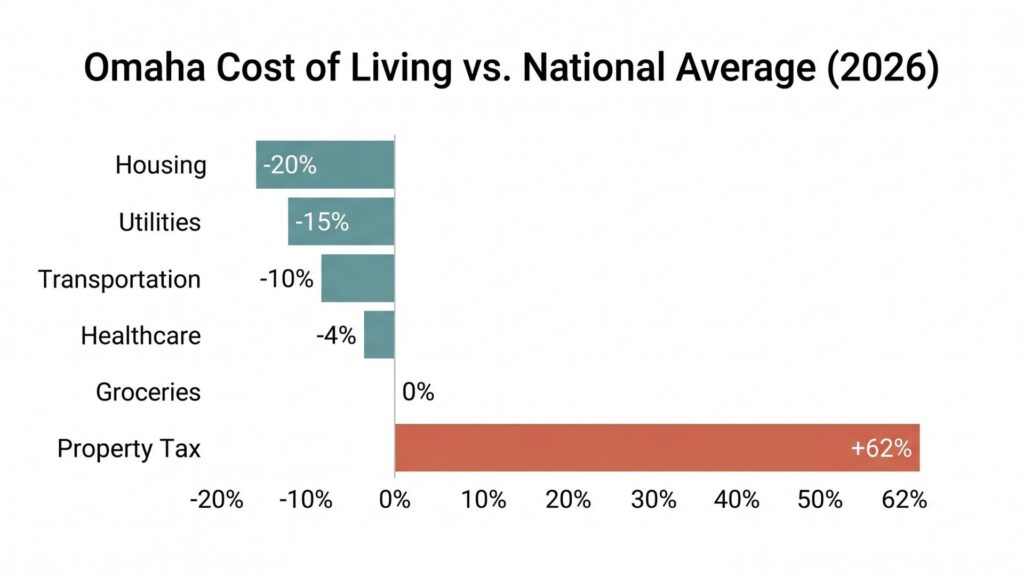
Omaha’s cost of living index scores 90, placing it roughly 10% below the national average, according to RentCafe’s 2026 Cost of Living Index. Housing drives most of that gap. Food, transportation, and healthcare also come in below the US norm.
What Your Dollar Actually Gets You Here
Someone relocating from Denver or Chicago to Omaha often describes it as getting a quiet salary bump without changing jobs.
A $100,000 salary in Omaha stretches considerably further than it does in any coastal metro. Groceries run right at the national average. Utilities run about 15% below it.
Here is how the categories break down:
| Expense Category | Omaha vs. National Average |
|---|---|
| Housing (buy or rent) | 20% below average |
| Utilities | ~15% below average |
| Transportation | ~10% below average |
| Healthcare | ~4% below average |
| Groceries | At national average |
| Property taxes | 62% above national average |
Source: RentCafe Cost of Living Index, Tax Foundation 2026
The property tax line is the one that surprises people. More on that below.
What Is Omaha’s Job Market Like in 2026?
Omaha’s unemployment rate held at 3% as of late 2025, according to the US Bureau of Labor Statistics, well below the national rate of 4.3%.
Four Fortune 500 companies are headquartered here:
- Berkshire Hathaway,
- Union Pacific,
- Mutual of Omaha,
- Kiewit Corporation.
Werner Enterprises, a major logistics company also based in Omaha, ranks in the Fortune 1000. Healthcare, construction, and financial services are the strongest growth sectors right now.
The Anchor Employers
These names come up constantly when people talk about why they moved to Omaha for work:
- Berkshire Hathaway (Warren Buffett’s holding company, headquartered downtown)
- Union Pacific Railroad (one of the largest US rail networks)
- Mutual of Omaha (insurance and financial services)
- Kiewit Corporation (one of the largest construction and engineering firms in North America)
- Offutt Air Force Base (about 12 miles south in Bellevue, major federal employment base)
- Nebraska Medicine / UNMC (major healthcare and research employer)
- Werner Enterprises (Fortune 1000 logistics and trucking company, also headquartered here)
The Honest Note on Wages
The BLS Omaha area economic summary shows average weekly wages around $1,220, compared to the national $1,394. You will likely earn less here than you would in a comparable role in a major metro. The tradeoff is that your paycheck goes further here because your fixed costs are lower.
The Tech Scene
It is not Silicon Valley, but Omaha has a real startup cluster. Companies like Hudl (sports video technology), BuilderTrend (construction software), and Sandhills Global (media and technology) have built meaningful presences here. The “Silicon Prairie” tag is not just boosterism.
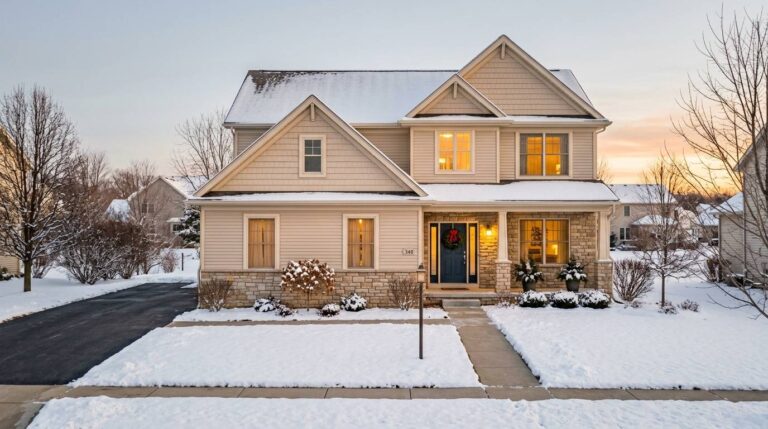
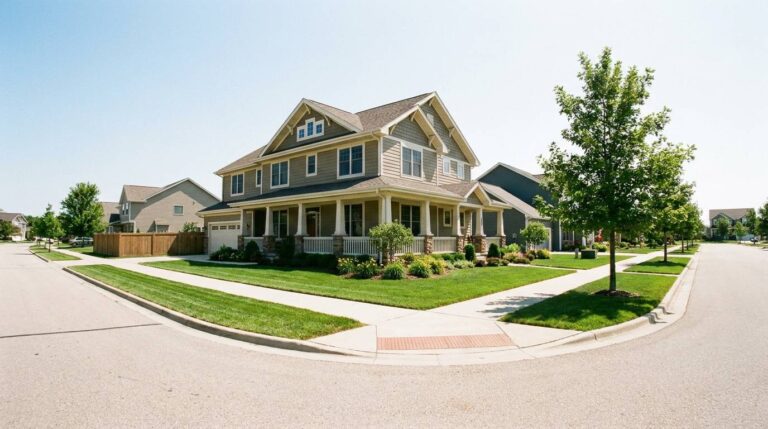
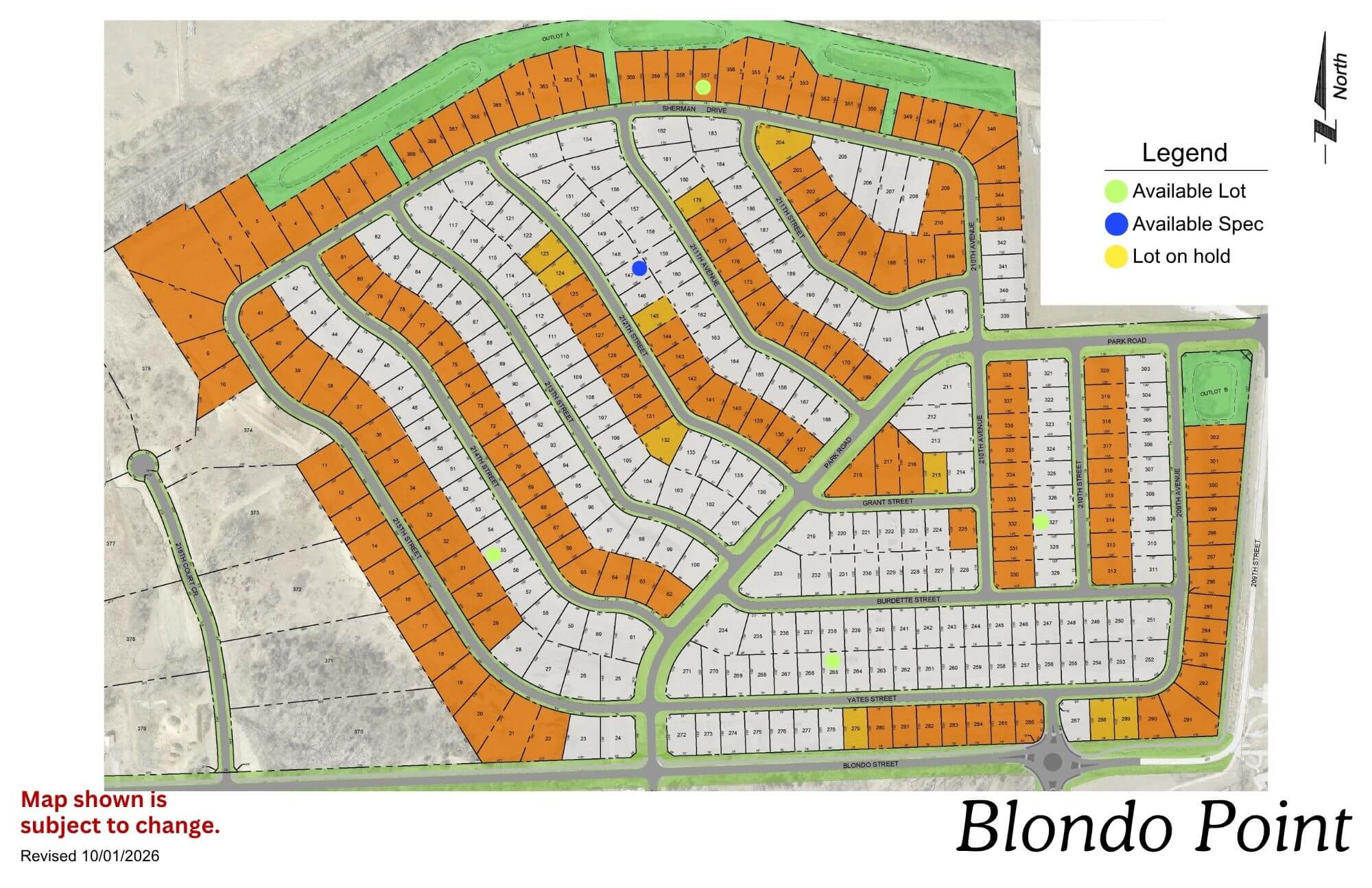
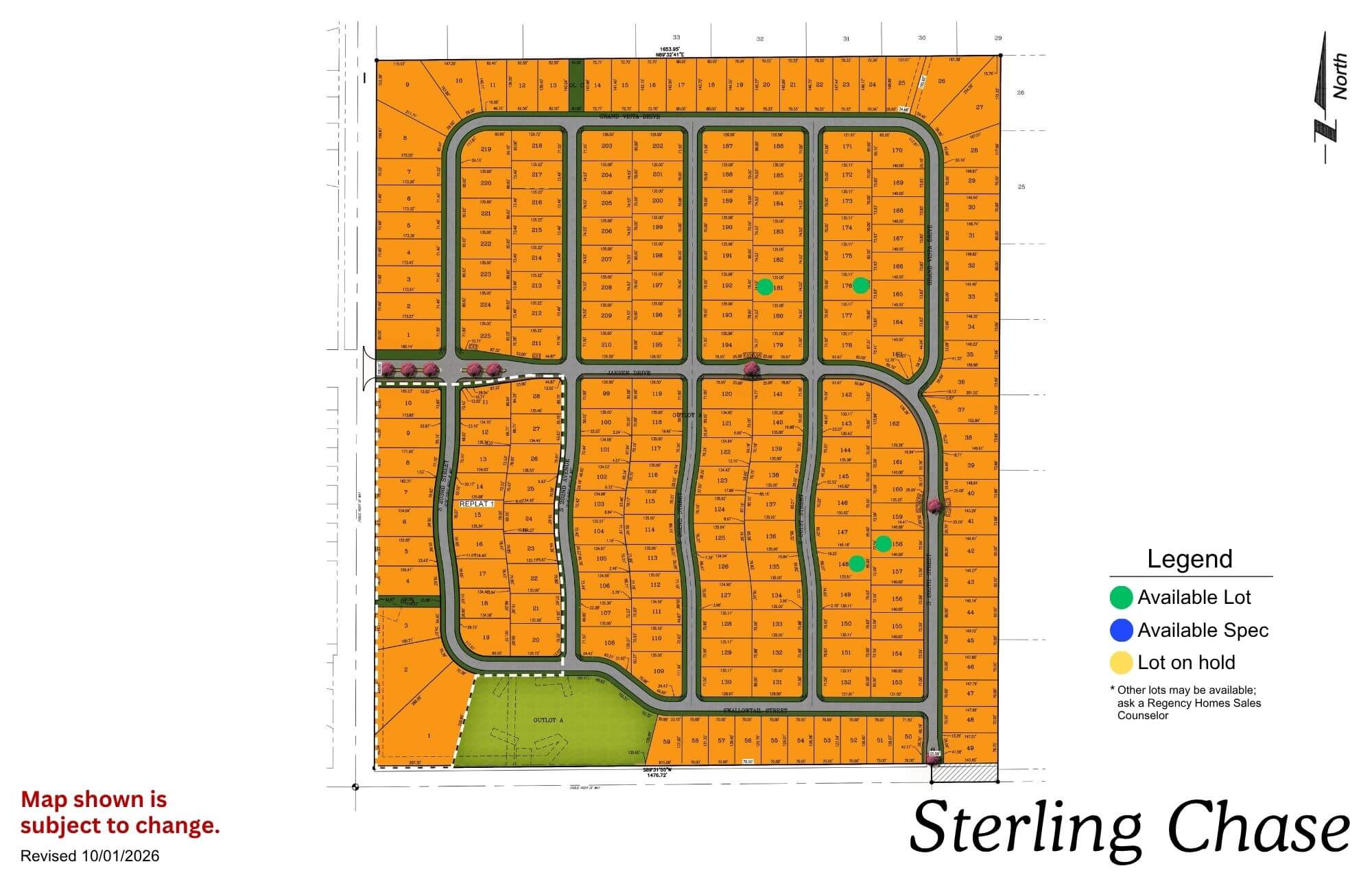
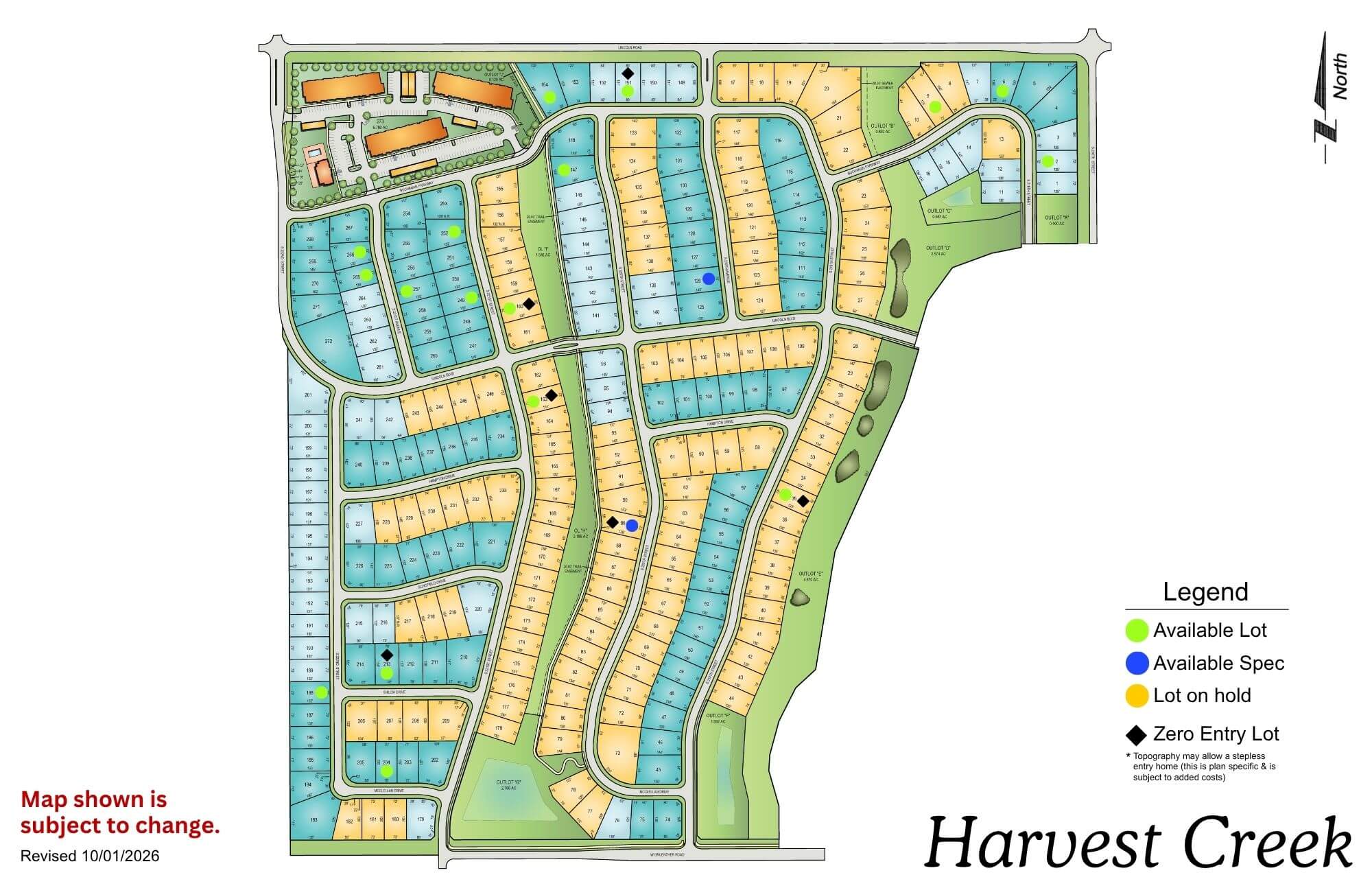
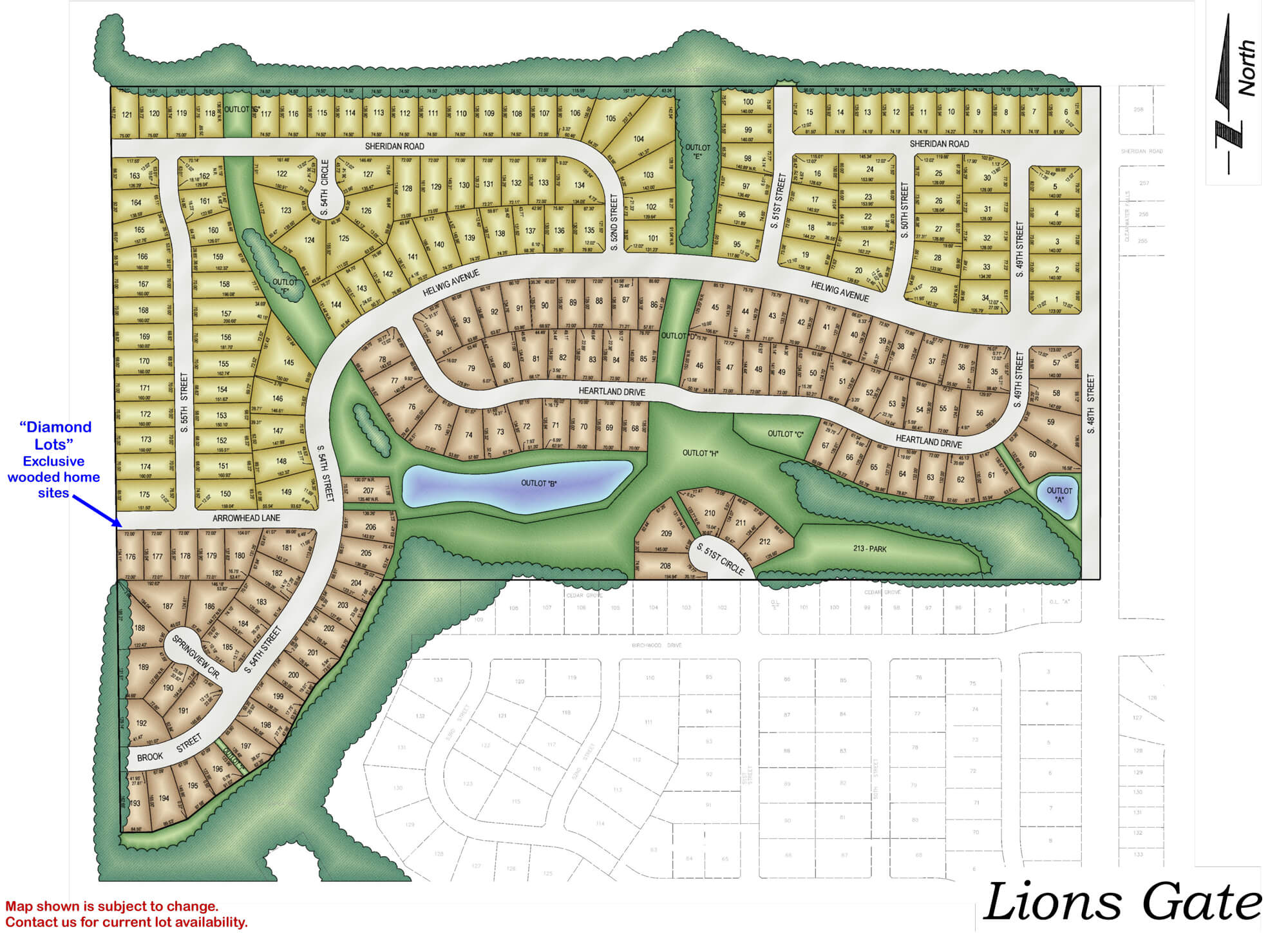
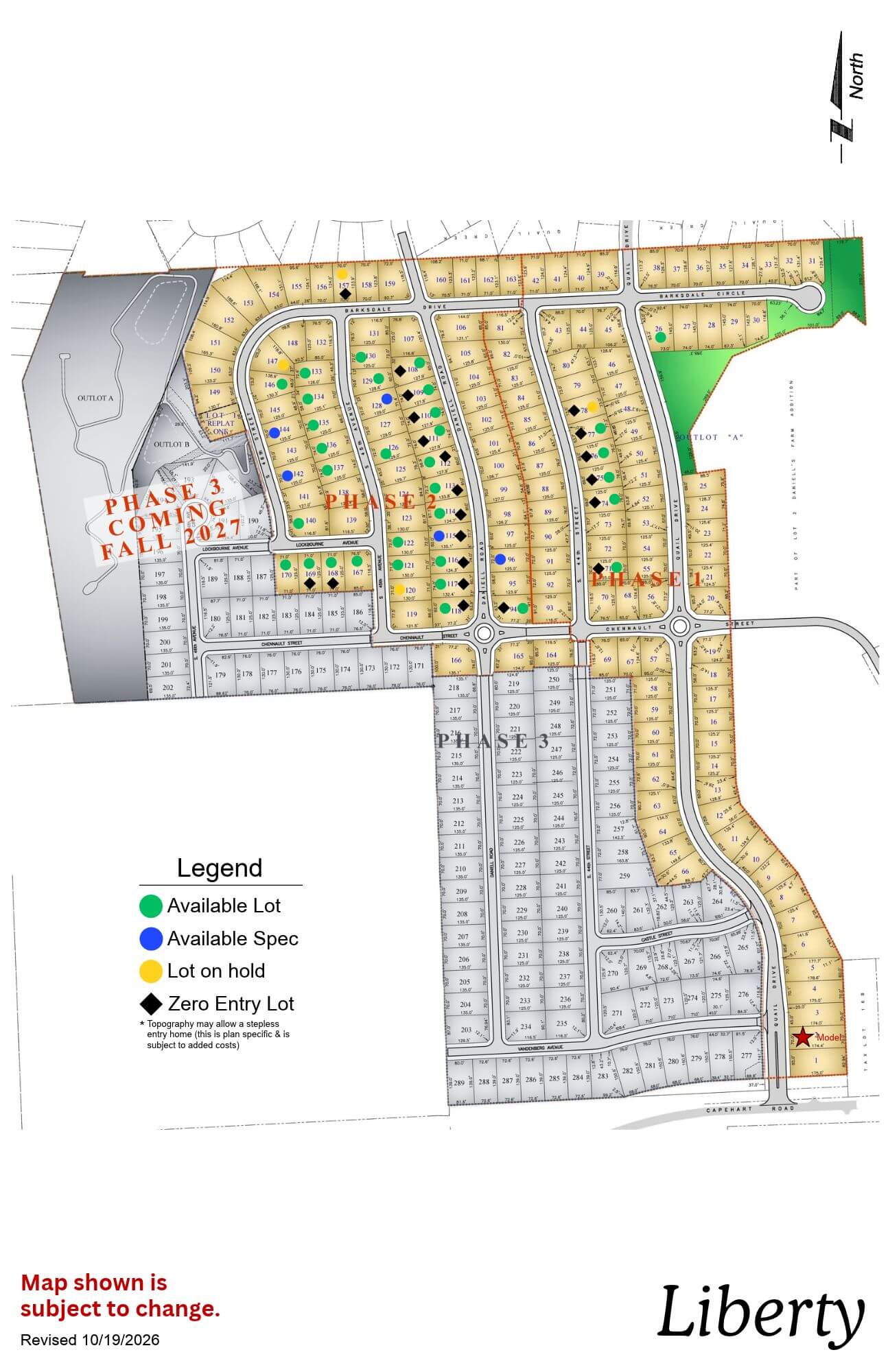
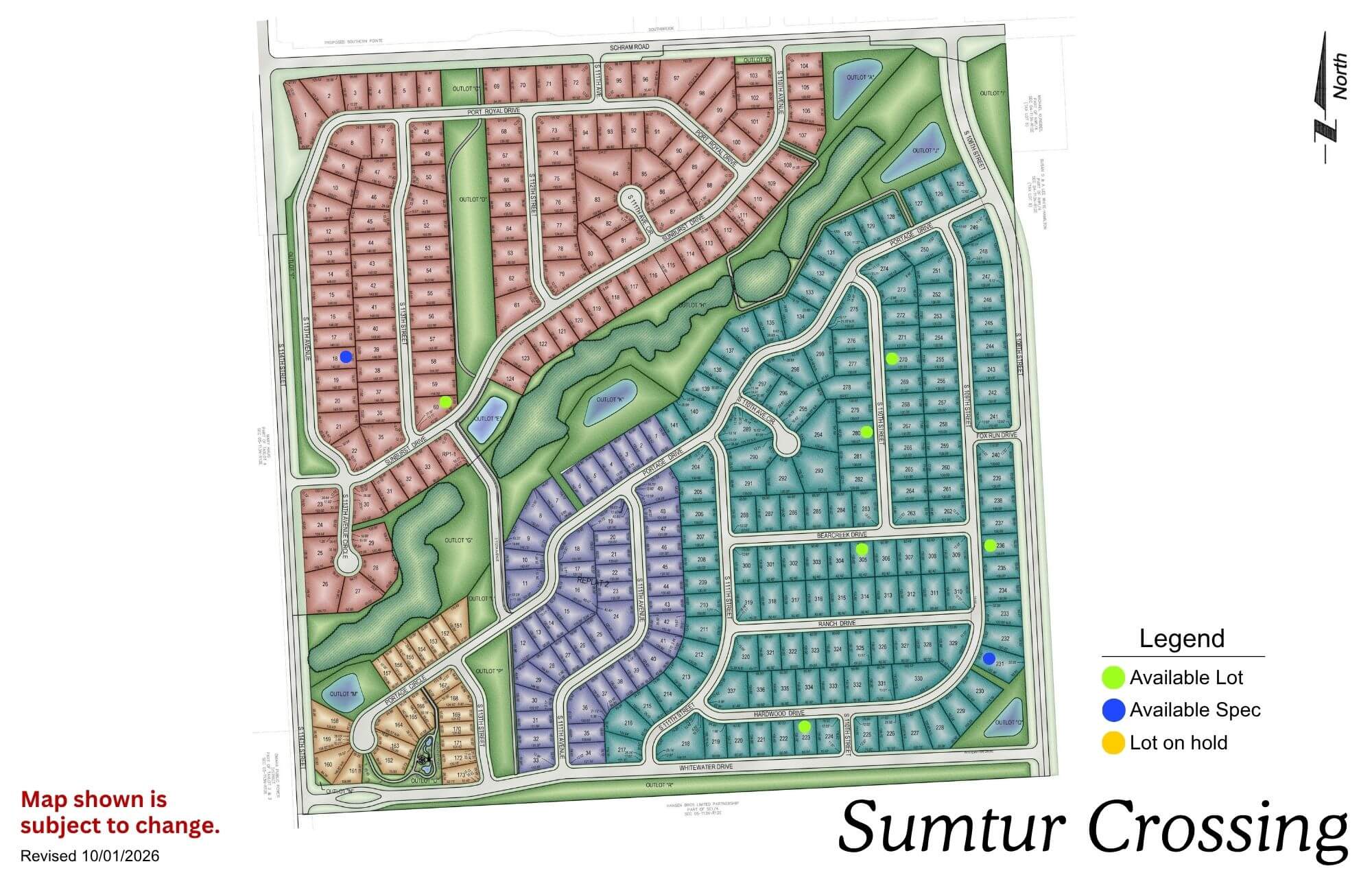
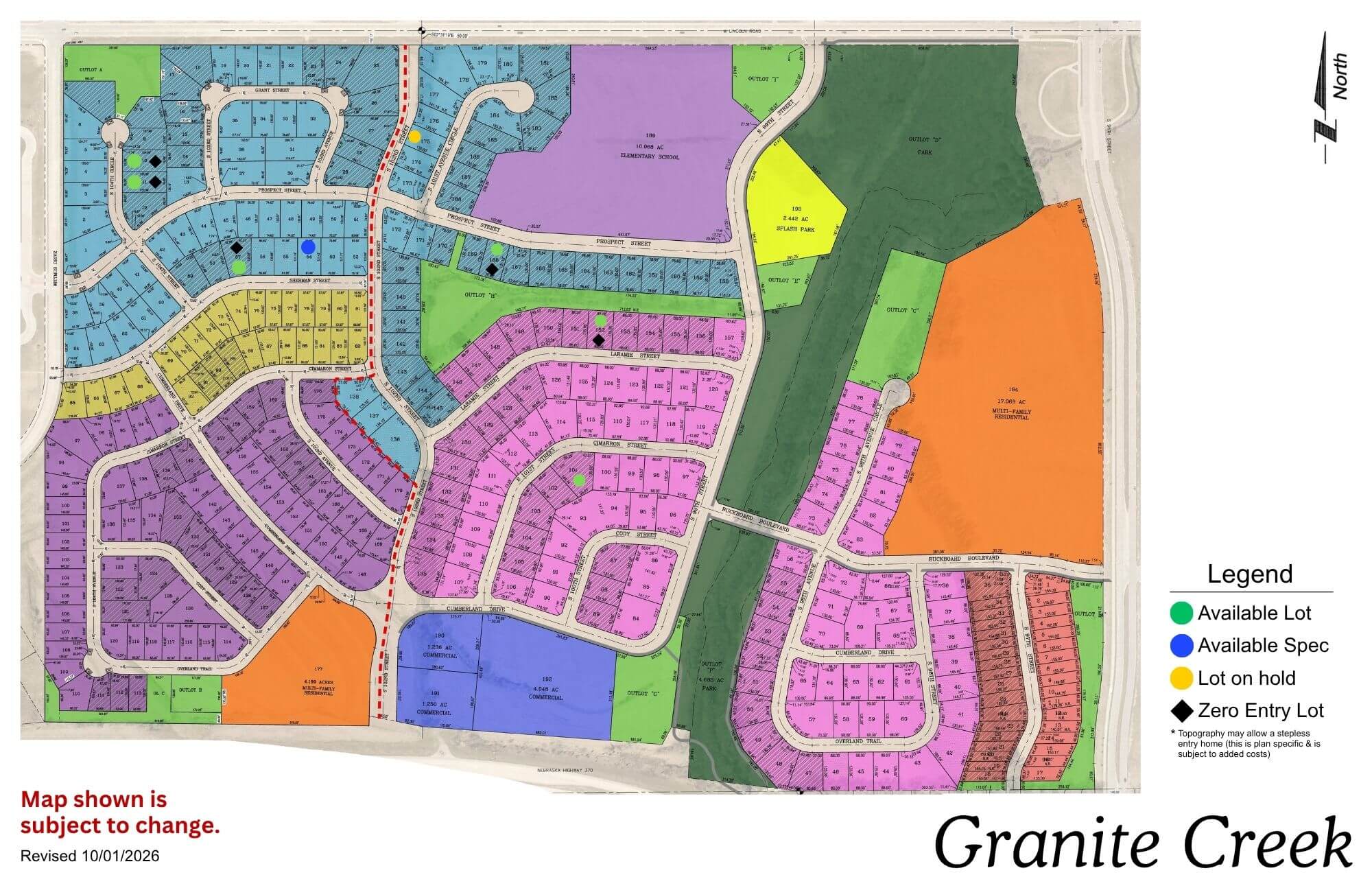
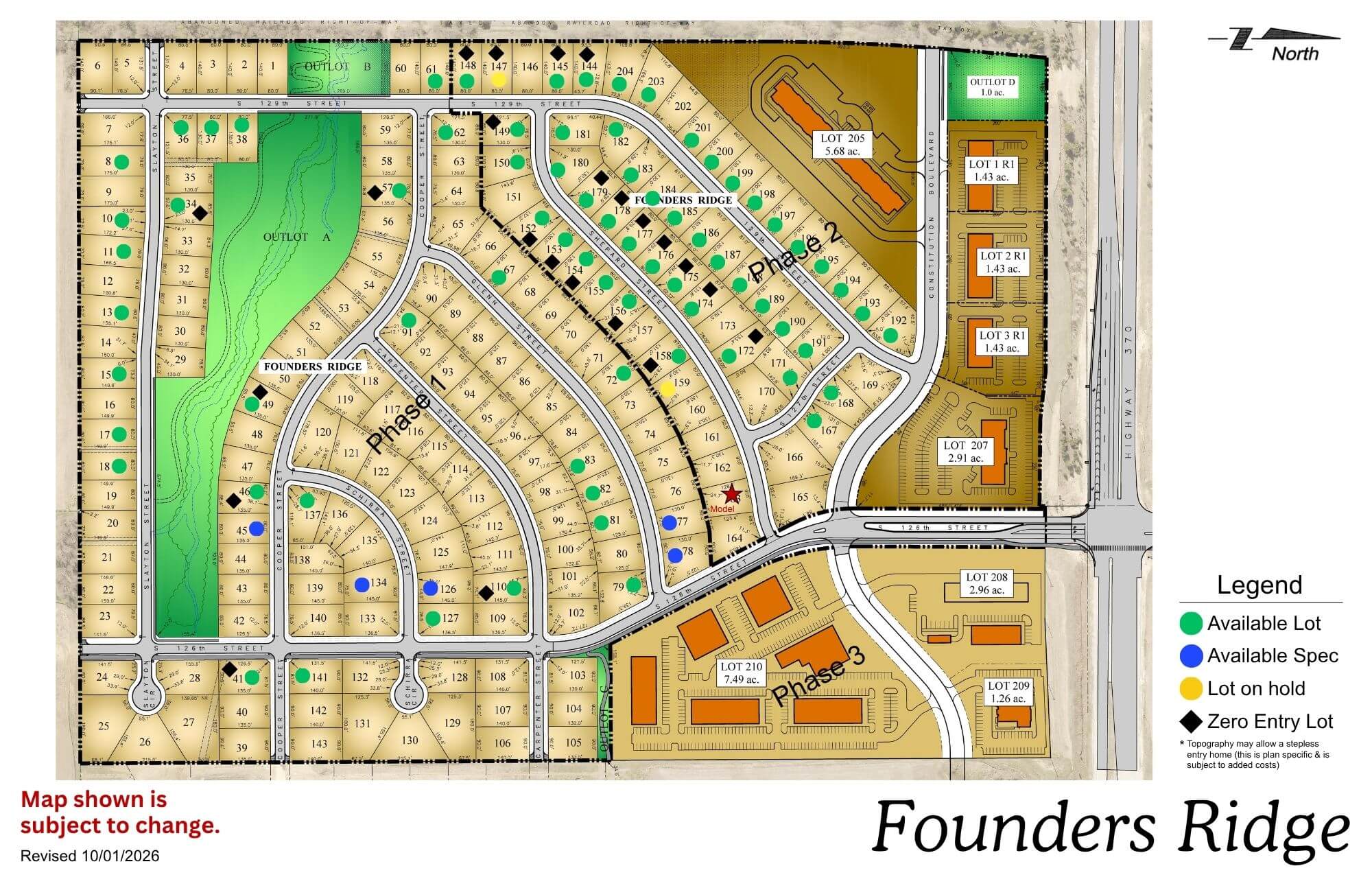
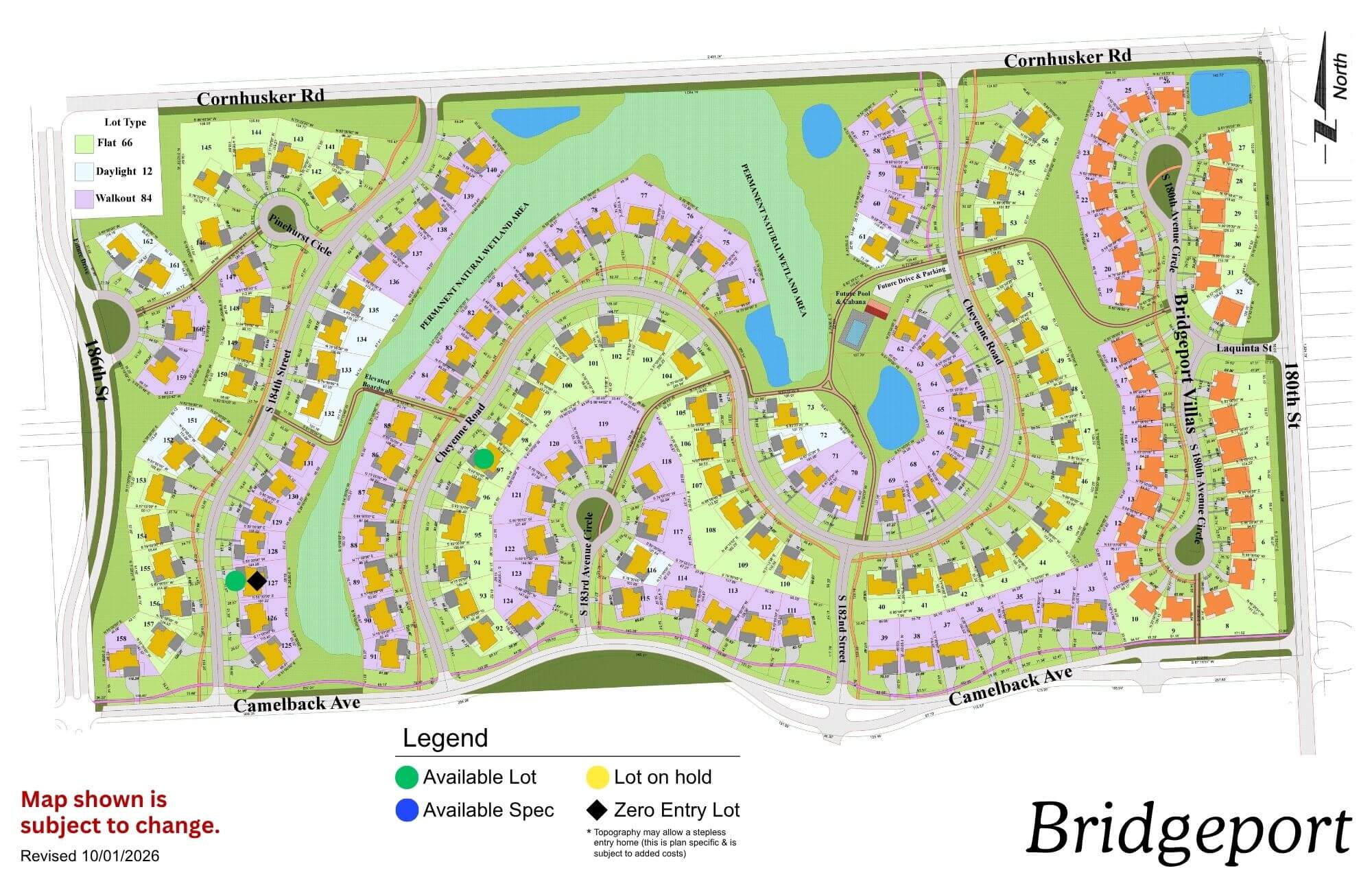
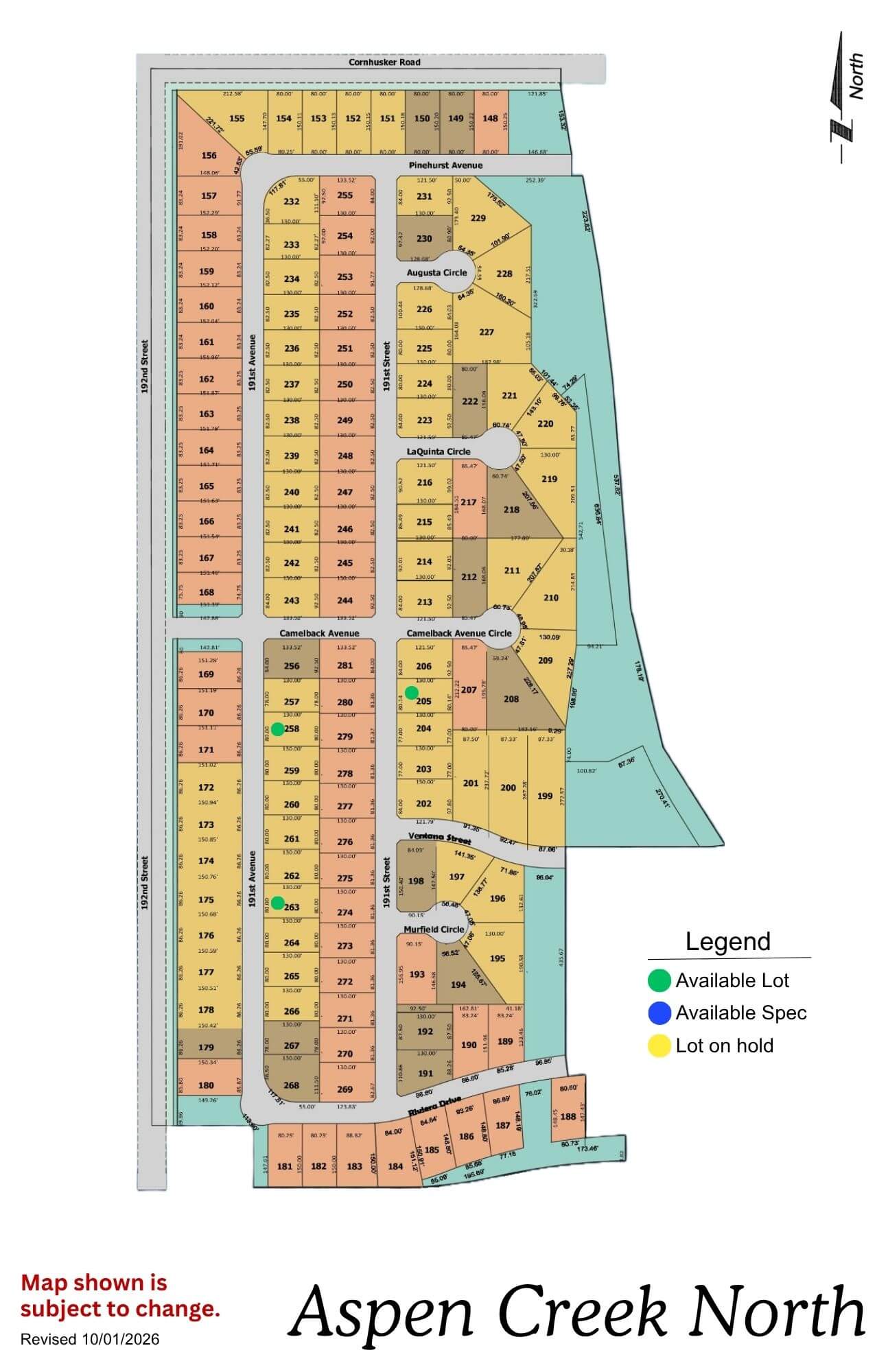
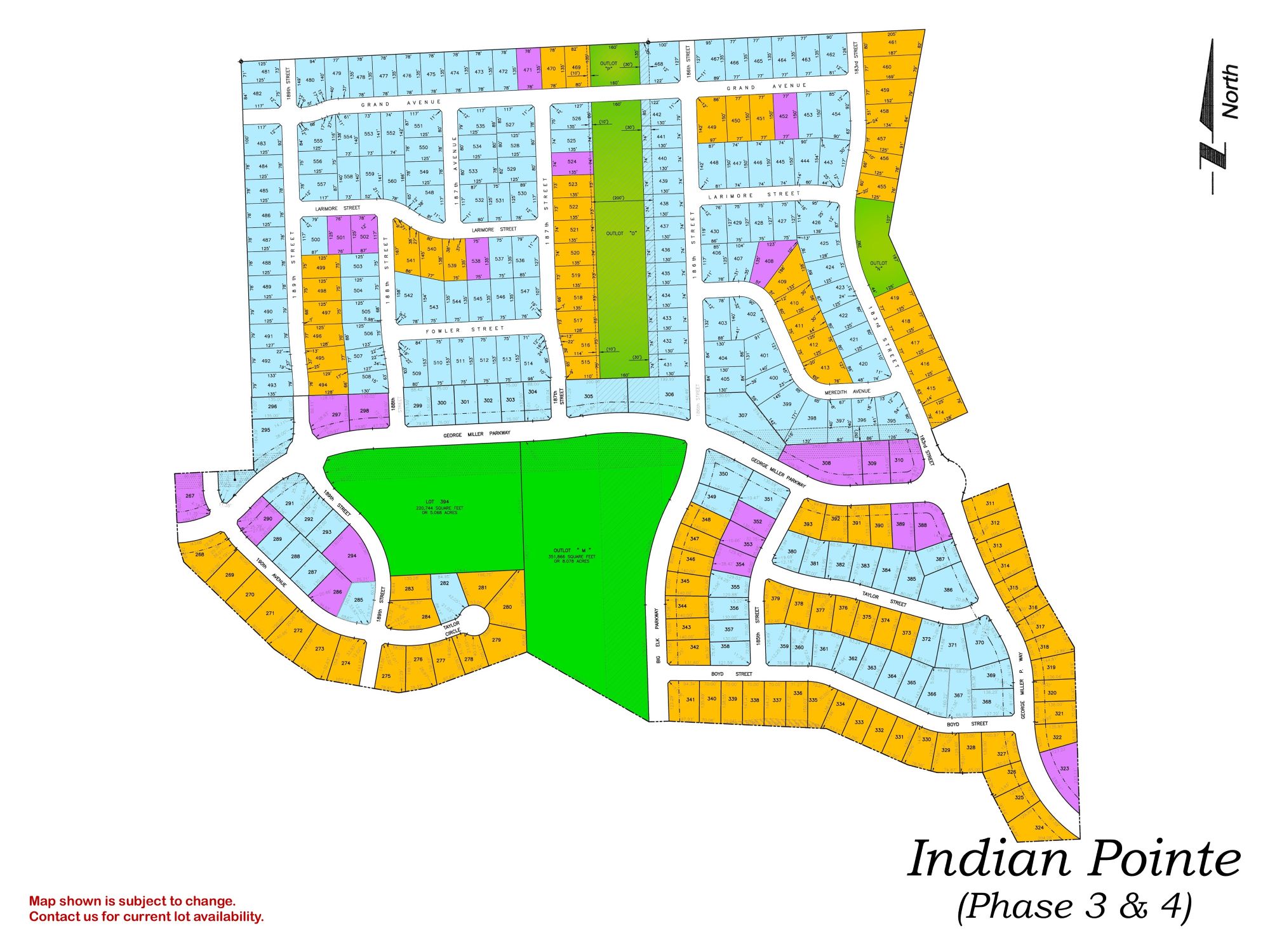
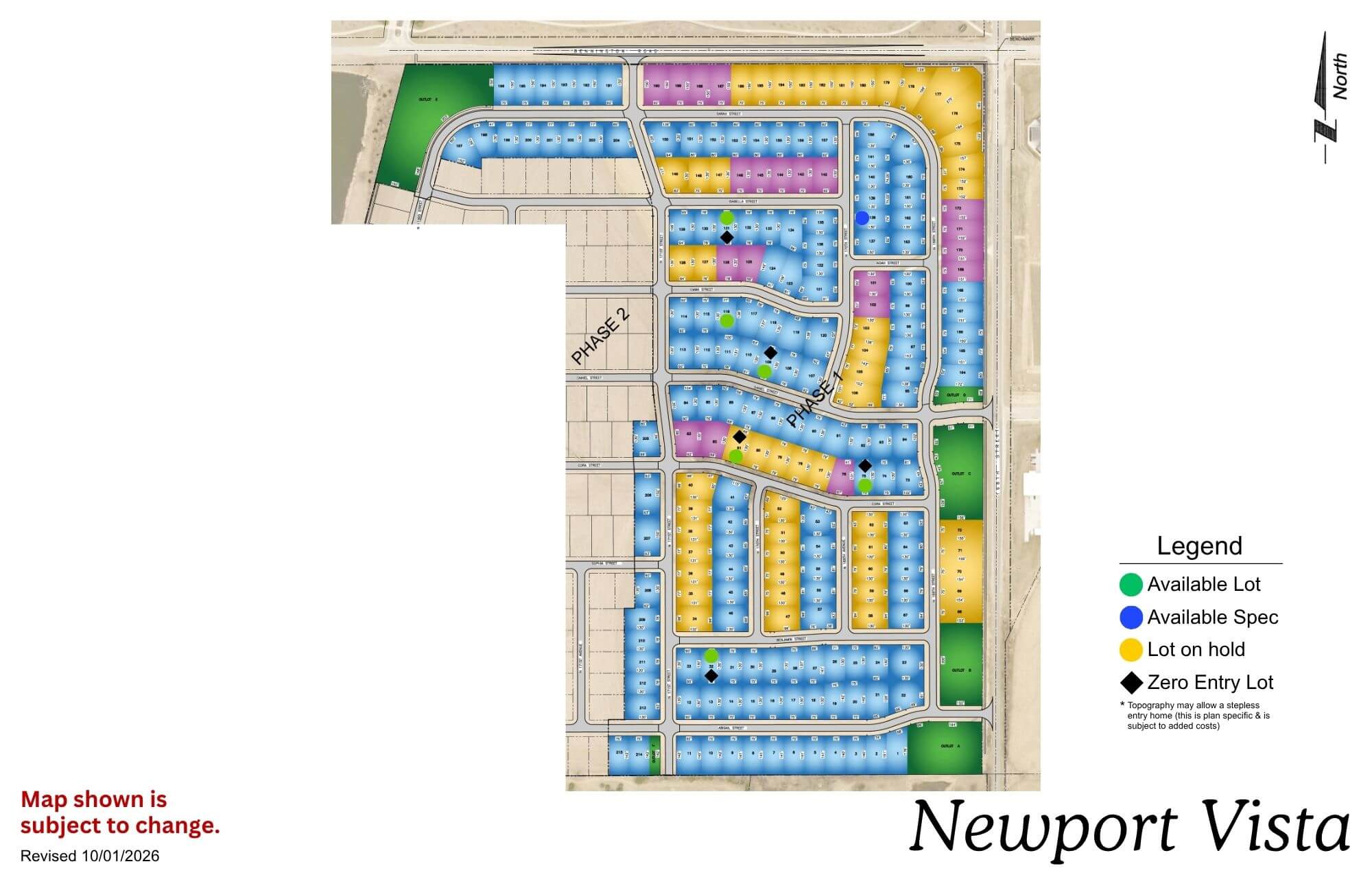
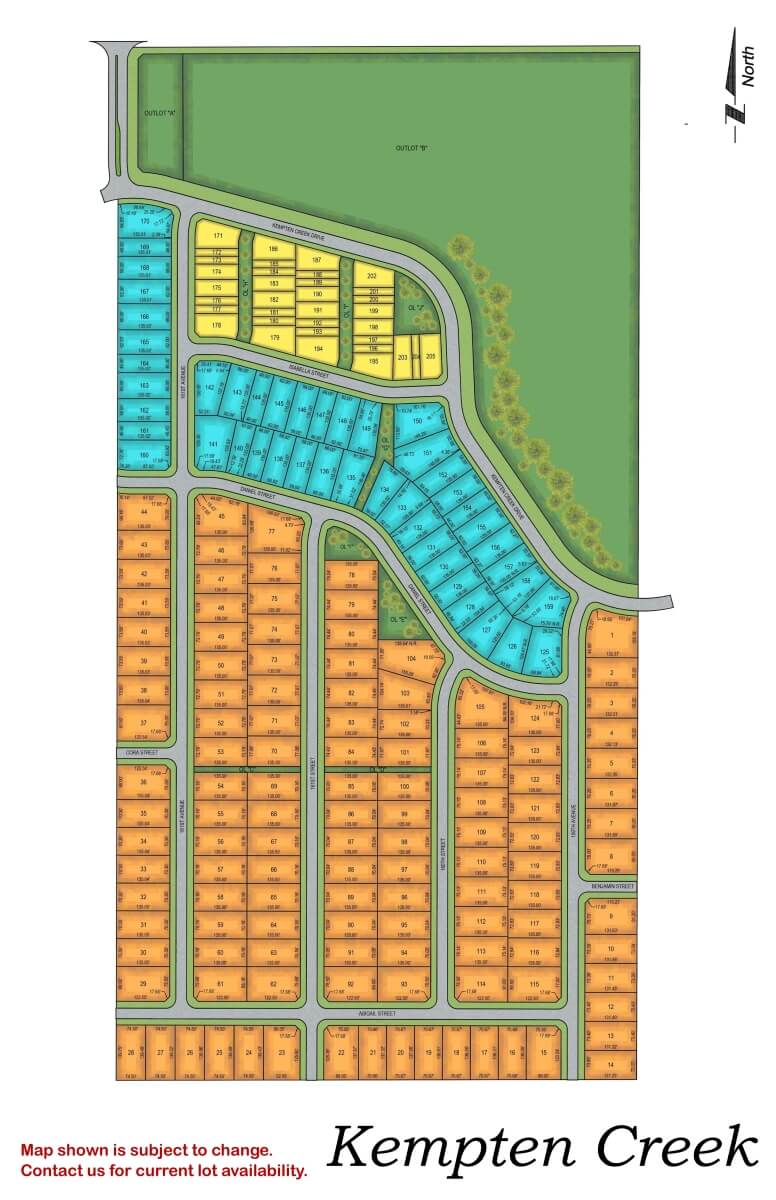
Building a new home in Omaha? Regency Homes has built across Papillion, Bennington, Gretna, and Council Bluffs for decades. Explore our current communities and available homes to see where your budget takes you. See New Home Communities in Omaha
Is Omaha a Good Place for Families?

Omaha consistently ranks among the top US metros for family livability. The Henry Doorly Zoo and Aquarium was named the #1 zoo in the country by USA Today for the fourth consecutive year in 2026. Schools in the Papillion-La Vista and Millard districts routinely top Nebraska state rankings. The metro area has over 100 public parks, and the commute times are genuinely short.
Schools Worth Knowing About
The Omaha metro has several distinct school districts, and they are not equal. If schools are your main criterion, the district you land in matters more than the city name.
- Papillion-La Vista Community Schools (Sarpy County): Consistently top-rated statewide
- Millard Public Schools: Large district in west Omaha, strong academic reputation
- Elkhorn Public Schools: Smaller, growing fast, high parent satisfaction
- Omaha Public Schools (OPS): Largest in the state, very diverse, more variable outcomes
Outdoor Life Near Omaha
This one surprises transplants. Omaha is flat, but it is not barren.
- Fontenelle Forest: 2,000 acres of river bluffs, trails, and wildlife in the city itself
- Lewis and Clark State Recreation Area: Just across the river in Council Bluffs
- Platte River State Park: About 45 minutes southwest, popular for hiking
- Mahoney State Park: 30 miles west, full outdoor recreation facility
Serious mountain hikers will eventually drive to Denver (about 8 hours) or Kansas City (about 2.5 hours) for bigger terrain. But within the metro and an hour’s drive, there is more than most people expect.
What Are the Biggest Cons of Living in Omaha?
The three most common complaints from real residents: property taxes, winters that overstay their welcome, and a car-dependent layout that makes getting around on foot or transit impractical. None of these are dealbreakers for most families, but none should surprise you on arrival.
Property Taxes: The Real Number
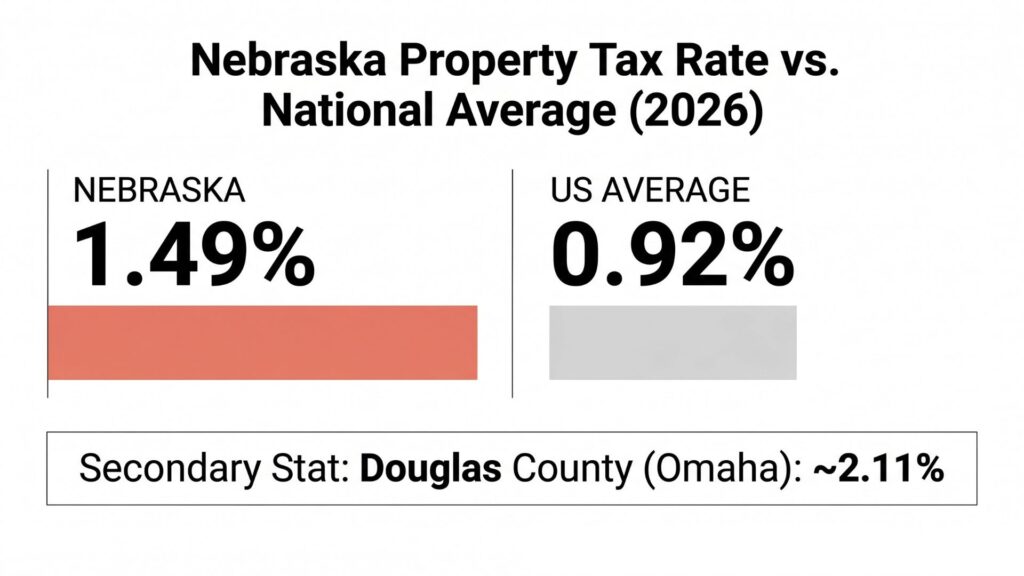
Nebraska’s effective property tax rate is approximately 1.49%, ranking it 7th highest in the nation, according to 2026 data from the Tax Foundation. Douglas County (Omaha proper) has an effective rate around 2.11%.
On a $255,000 home, that works out to roughly $5,380 per year in property taxes.
Compare that to the national median property tax bill of about $2,400, and you feel the gap quickly.
The bright side: Nebraska has reduced its income tax rate to a top rate of 4.55% for the 2026 tax year under LB 754, down from higher rates in prior years, and the state legislature passed property tax relief legislation that is phasing in through 2026 and 2027.
Winters
They are real. Omaha gets about 28 inches of snow per year. January averages around 20°F. Wind chill drops that further.
The flip side: summers are beautiful. Late May through September is genuinely excellent outdoor weather, and fall in the bluffs around the metro is one of the better-kept secrets in the Midwest.
Transit and Walkability
Omaha runs on cars. The Metro Area Transit bus system covers major corridors, but frequency is limited and coverage outside the core is thin. Most neighborhoods have a Walk Score in the 20-40 range.
If you are relocating from a city where you walk or transit everywhere, this adjustment takes time. Most families own two cars here as a practical matter.
How Does Omaha Compare to Other Midwestern Cities?
Omaha holds its own against Kansas City, Des Moines, and Lincoln on most livability measures. It has a larger corporate employment base than Des Moines, lower housing costs than Kansas City, and better amenity density than Lincoln. The comparison that surprises most people is against Minneapolis, which is larger but has meaningfully higher costs across the board.
| City | Median Home Price (2026) | Unemployment Rate | Fortune 500 HQs |
|---|---|---|---|
| Omaha, NE | ~$255,000 | 3.0% | 4 |
| Kansas City, MO | ~$295,000 | 3.5% | 4 |
| Des Moines, IA | ~$240,000 | 2.8% | 4 |
| Minneapolis, MN | ~$370,000 | 3.2% | 17 |
| Lincoln, NE | ~$225,000 | 2.6% | 0 |
Sources: Zillow median home price estimates, BLS state unemployment data, Fortune 500 2026 list, Grow Omaha
Minneapolis wins on corporate breadth. Des Moines wins on affordability. Omaha sits in the middle on cost while punching above its weight on employment stability.
What Do People Love Most About Living in Omaha?
The food scene catches transplants off guard. Omaha has a disproportionate number of independently owned restaurants for its size, from Midwestern steakhouses to legitimate Vietnamese, Ethiopian, and Japanese spots. The Old Market district downtown is walkable, lively, and one of the better urban cores in the Midwest.
The Cultural Calendar
- College World Series: June every year, downtown Omaha, nationally televised
- Berkshire Hathaway Annual Meeting: May, 40,000+ attendees from around the world, major civic event
- Omaha Symphony and Holland Center: Well-regarded performing arts venue
- Joslyn Art Museum: Free admission, strong permanent collection, excellent traveling exhibitions
The Community Feel
Long-term residents describe something that is harder to quantify: the city is navigable.
You can actually get somewhere in 15 minutes. You can find a neighborhood and know it. You can make friends through neighbors, school parents, and local regulars in a way that feels increasingly rare in larger metros.
People who grew up elsewhere and moved here in adulthood often note that social circles can be tight and well-established. Breaking in takes intention.
Thinking About Building New in Omaha? Regency Homes has been named Best of Omaha 2026. We build in Papillion, Bennington, Gretna, and Council Bluffs. Use our free pricing tool to see what your budget can do. Get Your Free Home Estimate
Is Omaha Growing or Shrinking?
Omaha is growing. The metro area population crossed 980,000 in 2026 estimates, on track to reach 1 million by the end of the decade. Sarpy County, which includes Papillion, Bellevue, and La Vista, is one of the fastest-growing counties in the Midwest. New housing development is concentrated in the south and west suburbs.
The growth is bringing new restaurants, retail, and infrastructure investment. It is also bringing some of the pressures that fast-growing metros see: traffic on certain corridors, school capacity questions in newer neighborhoods, and rising home prices in previously quiet areas.
FAQs: Living in Omaha, Nebraska
Is Omaha safe to live in?
Crime rates vary significantly by neighborhood, as they do in every mid-sized US city. The western and southern suburbs, including Papillion, Bellevue, Elkhorn, and Bennington, consistently rank among the safest communities in Nebraska. Downtown and north Omaha have higher crime indices. For families buying in new construction communities, the suburban areas carry a very different safety profile than aggregate city statistics suggest.
Is Omaha good for young professionals?
It depends on your field. Finance, healthcare, technology, and logistics all have strong hiring pipelines here. The social scene is active if you seek it out, particularly around the Old Market, Midtown, and Dundee neighborhoods. The main challenge for young professionals is that wages track below coastal norms, which can create friction for those paying down student debt while also trying to save for a home.
Does Omaha get tornadoes?
Nebraska is in tornado country, and Omaha is not immune. An EF4 tornado moved directly through the metro on April 26, 2024, causing significant damage in Elkhorn and Bennington. Locals reference the “Omaha Dome,” a geographic feature that can deflect some storms, but it is not a reliable shield. Storm shelters and reinforced construction are standard in new builds across the metro, and they matter here.
What neighborhoods are best for families in Omaha?
Papillion, Elkhorn, Millard, and Bennington are the most consistently recommended neighborhoods for families with school-age children. All four offer newer housing stock, strong school districts, and low crime rates. Regency Homes builds in several of these communities, including active developments in Papillion and Bennington.
How do public utility services work when moving to the metro area?
Most residents inside the immediate city footprint receive electricity from the customer-owned Omaha Public Power District, while natural gas and water services are managed entirely through the Metropolitan Utilities District. If you build or purchase a home in outer suburban enclaves such as Gretna or portions of Sarpy County, your natural gas service may be supplied separately by Black Hills Energy instead.
What should out-of-state buyers understand about local vehicle registration fees?
Unlike states that charge low flat fees for license plates, Nebraska calculates its annual motor vehicle taxes using the original manufacturer’s suggested retail price and the overall age of the vehicle. This value-based assessment system means registering a brand-new vehicle can cost several hundred dollars in the first year of ownership, though the total bill decreases gradually each year as the vehicle depreciates.
How are municipal services like trash collection handled in new construction subdivisions?
Within the official city limits of Omaha, weekly residential trash and recycling collection are provided by the municipality with no direct monthly fee, as the service is funded through local tax allocations. However, many newer suburban housing developments are established within temporary individual tax entities called Sanitary and Improvement Districts, which contract independently with private waste haulers until the neighborhood is formally annexed by the neighboring city.
Is Omaha a Good Place to Live? The Bottom Line
If you want a city where your money goes further, the job market is stable, the food is legitimately good, and you can own a home without the financial pressure that defines coastal living, Omaha makes a lot of sense.
The tradeoffs are real. Property taxes are a genuine shock for people moving from low-tax states. You will own a car. Winter is winter.
But for families who want a new home in a community that is growing, well-serviced, and still affordable, the Omaha metro in 2026 is one of the more compelling markets in the country.
Ready to See What Omaha Home Ownership Looks Like? Regency Homes is the Best of Omaha 2026 winner. We have been building across the metro for decades. Let’s talk about what you want to build and where. Contact Regency Homes