


What you need to know now about finished basement ideas:
- The most effective finished basement ideas focus on high-utility zones, like guest suites, home offices, or media rooms, that leverage the basement’s natural sound dampening and temperature consistency.
- Integrating your basement finish into the initial home build saves you 30% to 40% in costs compared to a retrofit later.
- A well-executed basement finish typically yields a 70% return on investment, making it the most cost-effective square footage in a modern floor plan.
- Smart planning requires getting the “unsexy” details right first (like plumbing rough-ins and ceiling heights) before picking out paint colors or bar stools.
A finished basement is not bonus space. It is the most cost-effective square footage in your entire home.
We build homes across Omaha, Papillion, Bellevue, Elkhorn, Gretna, and Bennington. Over the years, we have watched homeowners leave their basements unfinished at closing, only to call us 18 months later wishing they had done it from the start. The plumbing rough-ins are harder to reach. Instead of a seamless finish, your drywall crew is left playing Tetris around a furnace that was positioned for mechanical convenience rather than architectural flow. The flooring goes in after the HVAC ducts are already locked in place.
This guide covers the best finished basement ideas for Nebraska homes in 2026, what each layout actually costs, how to meet code, and how to plan your basement during the build so you are not paying double later.
What Are Basement Finishing Costs in Nebraska in 2026?
Finishing a basement in Nebraska costs between $30 and $75 per square foot in 2026, depending on the scope and finish level. For a typical 1,200-square-foot basement, that puts the total range at $36,000 to $90,000.
The wide range comes down to what you put in the space. A basic rec room with carpet, drywall, and lighting sits at the low end. A basement with a full bathroom, wet bar, and custom built-ins pushes toward the top.
Here is how the costs break down by finish level for a 1,200-square-foot Nebraska basement:
| Finish Level | Cost Per Sq Ft | Total (1,200 sq ft) | What You Get |
|---|---|---|---|
| Basic finish | $30-$40 | $36,000-$48,000 | Drywall, carpet, recessed lighting, paint, one egress window |
| Mid-range finish | $45-$55 | $54,000-$66,000 | All of basic + bathroom, LVP flooring, wet bar rough-in |
| High-end finish | $60-$75 | $72,000-$90,000 | All of mid-range + full kitchen/bar, home theater, custom millwork |
One number that gets overlooked: finishing during initial construction saves $10,000-$20,000 compared to doing the same work after you have moved in. The framing crew is already on-site. The electrician is already pulling wire. The plumber is already setting drains. Adding basement work to an active job costs a fraction of bringing everyone back for a standalone project.
If you are weighing total build costs, our breakdown of the cost to build a house in Nebraska covers the full picture from lot to closing.
What Are the Best Basement Layout Ideas for New Construction?
The best basement layout for a new construction home depends on your family’s size, how you use your home, and whether you want the space to generate rental income or serve as a private retreat. After building hundreds of homes in the Omaha metro, we see five layouts come up again and again.
1. The Family Rec Room
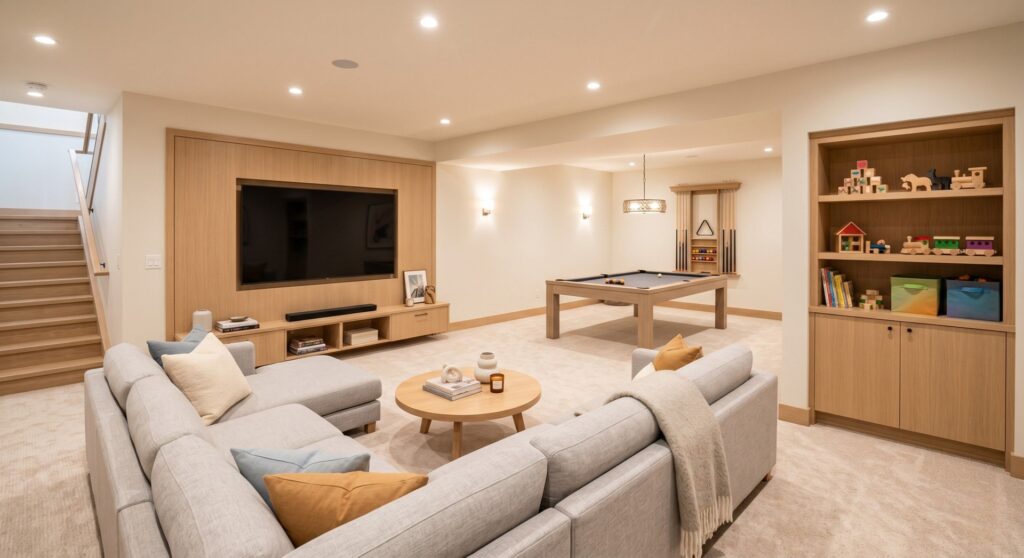
This is the most popular finished basement layout in Nebraska, and for good reason. It is a single large open space with room for a TV area, a play zone for kids, and maybe a pool table or game area. The layout works because it is simple, affordable, and flexible. As your kids grow, the space grows with them.
Typical cost: $36,000-$48,000 for 1,200 square feet.
Best for: Families with young children who need a separate play and hangout area away from the main living floor.
2. The Guest Suite
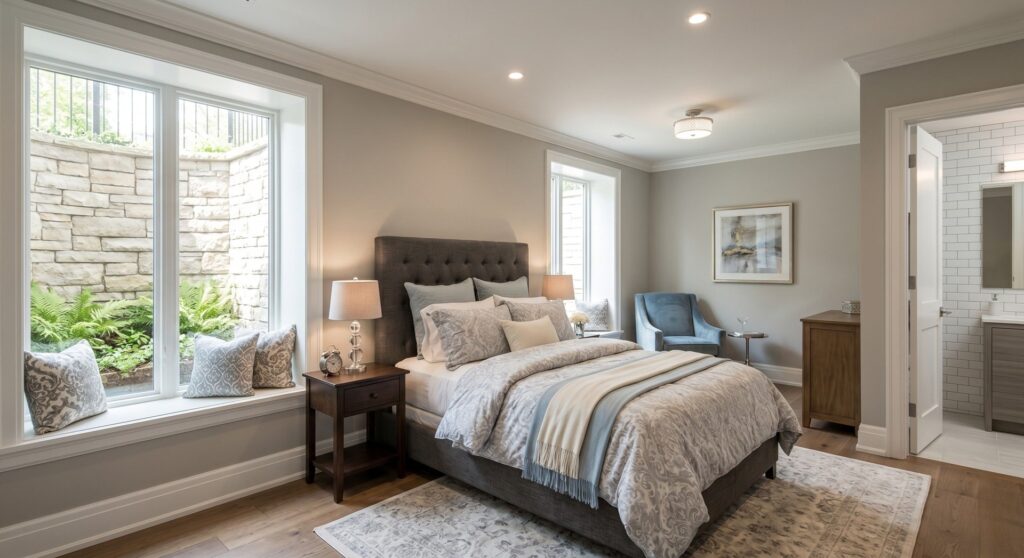
A basement bedroom with a full bathroom and a small sitting area turns your lower level into a private guest suite. Nebraska code requires at least one egress window in any basement bedroom (more on that below), but when you plan for it during construction, the window well and proper sizing are built into the foundation pour.
Typical cost: $45,000-$55,000 including the bathroom and egress window.
Best for: Homeowners who host family regularly or have aging parents who visit for extended stays.
3. The Home Theater
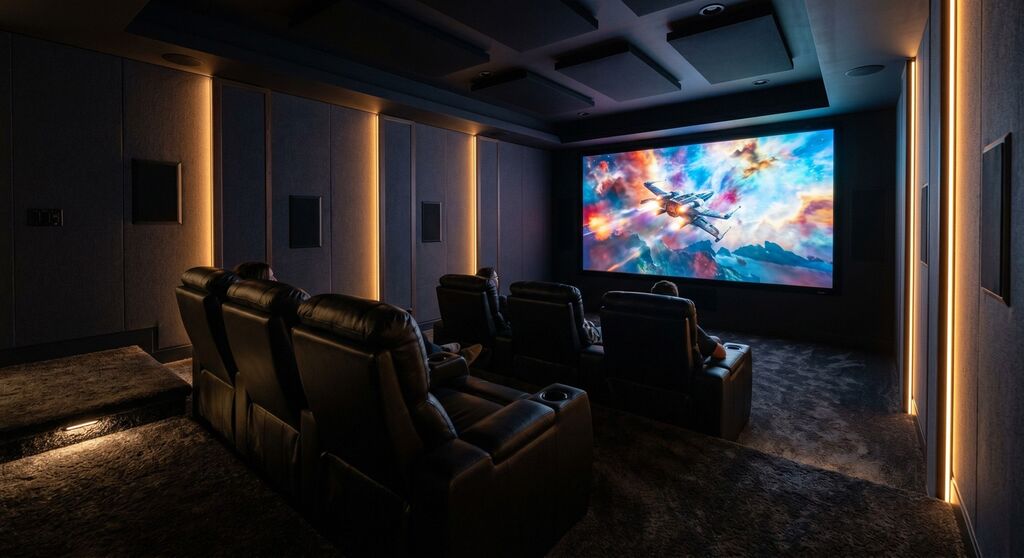
Nebraska winters are long. A dedicated home theater in the basement makes those January and February nights a lot more enjoyable. The below-grade walls naturally block outside light, which means you do not need blackout treatments. The concrete and earth surrounding the space also dampen sound transmission, so movie night does not shake the bedroom floors above.
Typical cost: $55,000-$70,000 including acoustic treatment, tiered seating platform, and AV rough-ins.
Best for: Movie and sports fans who want a dedicated viewing room with proper sound isolation.
4. The Walkout Basement Entertaining Space
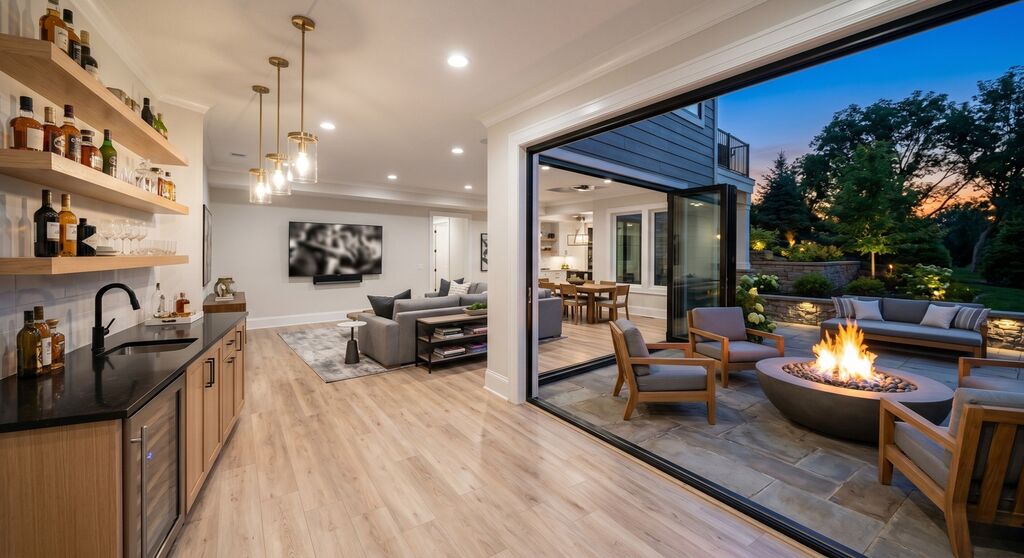
If your lot has the right grade for a walkout basement, you have access to the best basement layout option in Nebraska. A walkout gives you full-height patio doors on the lower level, flooding the space with natural light and providing direct access to the backyard. This turns the basement from a “lower level” into a genuine second living floor.
Many of the neighborhoods where we build in Omaha have lots with the elevation changes needed for a walkout. Ask about lot grades early in the process, because this is a decision that gets locked in at the foundation stage.
Typical cost: $60,000-$85,000 for a finished walkout with entertaining area, wet bar, and bathroom.
Best for: Homeowners who entertain often and want indoor-outdoor flow on the lower level.
5. The Basement Home Office or Studio
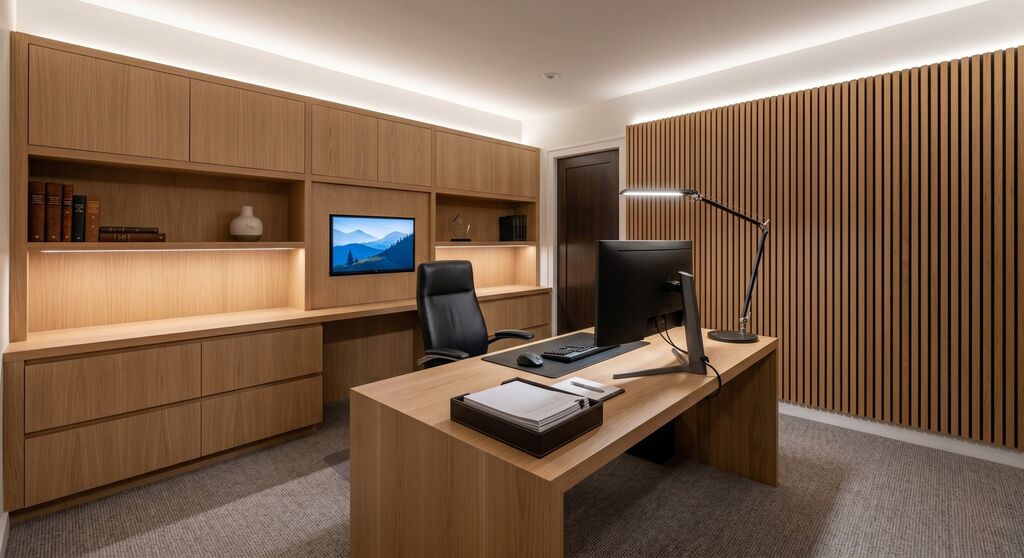
Remote work is not going away. A basement office gives you a quiet, separated workspace that you can close the door on at the end of the day. The sound isolation you get from being below grade is a real advantage for video calls and focused work. We are seeing more buyers request a dedicated office with built-in cabinetry, task lighting, and wired ethernet in their basement plans.
Typical cost: $40,000-$50,000 including a half bath and custom built-in desk/shelving.
Best for: Remote workers, content creators, or anyone who needs a quiet dedicated workspace away from the main floor.
Which Basement Flooring Works Best in Nebraska?
Luxury vinyl plank (LVP) is the best flooring for Nebraska basements. It is 100% waterproof, handles temperature swings without expanding or contracting, and looks close to real hardwood at a fraction of the cost. Nebraska basements deal with moisture from below (soil contact) and occasional humidity spikes during spring and early summer. LVP handles all of it.
Here is how the main basement flooring options compare:
| Flooring Type | Cost Per Sq Ft (Installed) | Waterproof | Best For | Watch Out For |
|---|---|---|---|---|
| Luxury vinyl plank (LVP) | $3-$7 | Yes | Family rooms, bedrooms, offices | Buy commercial-grade (20+ mil wear layer) |
| Porcelain tile | $6-$12 | Yes | Bathrooms, wet bar areas, laundry | Cold underfoot without radiant heat |
| Engineered hardwood | $6-$10 | Partially | Formal living areas | Needs vapor barrier, not for high-moisture areas |
| Polished concrete | $3-$8 | Yes | Modern/industrial spaces, home gyms | Needs epoxy seal, hard on joints for standing |
| Carpet tile | $2-$5 | No | Play areas, home theaters | Replace individual tiles if water damage occurs |
One tip from experience: do not install solid hardwood in a Nebraska basement. We have seen it buckle in the first spring. The humidity changes between January (15-20% indoor RH) and June (50-60% indoor RH) are too wide for solid wood to handle. LVP or engineered hardwood with a proper moisture barrier are the right calls.
Can a Finished Basement Add Value to Your Home?
Yes, and the return is strong. A finished basement adds an average of 70% of the project cost to the home’s resale value, according to the 2024 Cost vs. Value Report for the West North Central region. That makes it one of the highest-ROI improvements you can make to a home in this market.
Here is the math for a mid-range basement finish:
| Metric | Amount |
|---|---|
| Cost to finish (1,200 sq ft, mid-range) | $54,000-$66,000 |
| Average value added at resale | $38,000-$46,000 |
| Effective cost of living space | $13-$22 per sq ft (after value recovery) |
| Cost of main-floor square footage | $150-$200+ per sq ft |
That last line is the one that matters. You are getting livable square footage at a fraction of what the same space costs on the main level. For buyers comparing a 1,800-square-foot home with an unfinished basement versus the same home with a 1,200-square-foot finished lower level, the finished basement version is a much better deal per usable square foot.
If you are still early in the planning process and comparing the overall cost picture, our guide to whether it is cheaper to build or buy a house in Omaha breaks down the numbers.
Basement Design Details that Make the Space Feel Like the Main Floor
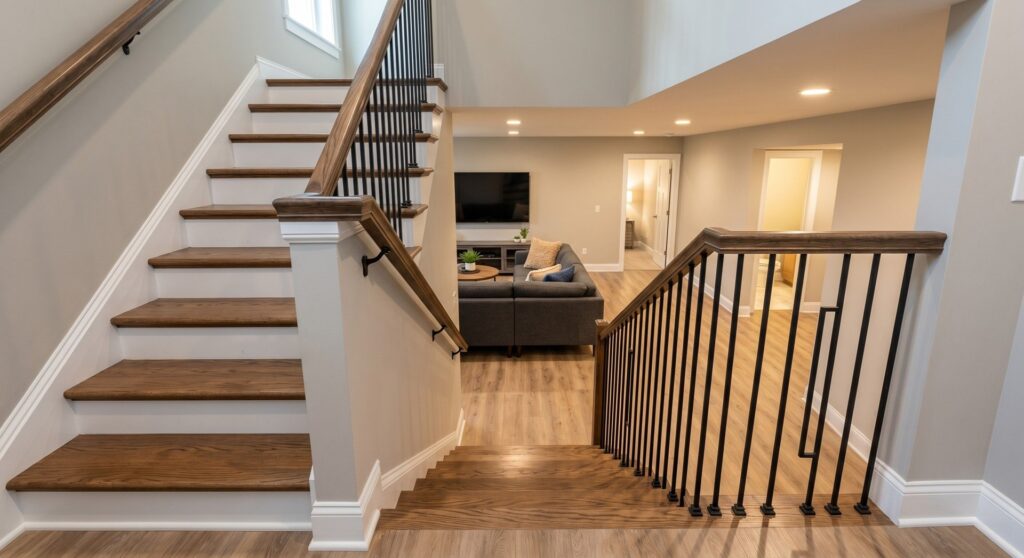
The difference between a basement that feels like a basement and one that feels like a natural part of your home comes down to a few specific details. None of them are expensive. All of them require planning during the build.
9-Foot Ceilings
We said it above, but it is worth repeating. The single biggest factor in how a basement feels is ceiling height. Eight feet is code minimum. Nine feet makes the space feel open and connected to the rest of the home.
Recessed Lighting on Dimmers
Basements do not have the natural light advantage that the main floor has. Recessed LED cans on dimmer switches let you control the mood in every zone. Plan for one recessed light per 25 square feet as a starting point, and use 3000K color temperature for a warm feel.
Consistent Flooring and Trim
Use the same baseboard profile, door casing, and paint palette that you use on the main floor. When the trim style changes between levels, your brain registers it as a different space. When it matches, the basement reads as a continuation of the home.
A Real Staircase, Not an Afterthought
Open-tread stairs, proper handrails, and adequate lighting on the stairway make the transition between floors feel intentional. We frame for 42-inch-wide stairs minimum (code is 36 inches) because wider stairs feel like a main-floor connection, not a basement access point.
Sound Isolation Between Floors
A layer of acoustic insulation (mineral wool batts) between the basement ceiling joists and the main floor subfloor reduces sound transmission by 50% or more. This costs about $1.50-$2.50 per square foot of ceiling area and makes both levels more comfortable. It is the kind of detail that costs almost nothing during framing but is a major disruption to add after drywall is up.
Our kitchen and great room galleries on the Regency Homes site show the finish quality we bring to every level of the home, including the basement.
Frequently Asked Questions about Finished Basement Ideas
Will executing my finished basement ideas increase my property taxes?
Yes, converting raw storage space into livable square footage will increase your home’s assessed value and your annual tax bill. Assessors calculate this hike based on the quality of the finish and whether you added a bedroom or a full bathroom, though below-grade square footage is usually taxed at a lower rate than your main floor. I always advise homeowners to call their local assessor’s office before breaking ground to get a rough estimate, so there are no financial surprises when the next tax cycle rolls around.
Should I install a drop ceiling or drywall in the lower level?
Drywall looks infinitely better and makes a basement feel like a true extension of your home, but a drop ceiling offers unmatched access to the plumbing and electrical lines running between your floor joists. If you are building new and have engineered your mechanical runs cleanly to the perimeter of the home, drywall is the superior choice for a high-end look. However, if you are retrofitting a space with a chaotic web of pipes and HVAC dampers that might need frequent servicing, a modern acoustic drop ceiling is the safer play.
How do you keep a finished basement warm without a separate furnace?
Relying solely on your main HVAC system to heat a basement usually leaves the space feeling cold because warm air naturally rises to the upper floors. The most comfortable solution is installing electric radiant floor heating beneath your hard-surface flooring, which warms the room from the ground up and neutralizes the chill of the concrete slab. If radiant floors blow up your budget, adding a dedicated ductless mini-split heat pump allows you to control the basement climate completely independently from the rest of the house.
What type of lighting works best for basements with low clearance?
Recessed LED can lights are the absolute gold standard for lower levels because they consume zero headroom and cast a wide, even pool of light that eliminates dungeon-like shadows. Avoid hanging pendants or bulky flush-mount fixtures anywhere outside of a dedicated bar or kitchen island, as they visually lower the ceiling and create a cramped atmosphere. You should also put every lighting zone on its own dimmer switch so you can instantly transition the space from a bright, high-energy playroom to a relaxed evening lounge.
Can you soundproof a basement ceiling after the framing is done?
You can try, but your options shrink dramatically once the drywall is fastened to the joists above. True soundproofing requires decoupling the basement ceiling from the main floor using resilient channels and packing the joist cavities with dense acoustic insulation while the ceiling is still wide open. If the drywall is already up, the best you can do without tearing it down is adding a second layer of drywall with a specialized sound-dampening compound sandwiched in between, which helps muffle voices but does very little to stop the heavy thud of footsteps.
What Are Your Next Steps for a Finished Basement?
If you take nothing else away from this guide, remember this: the clock on your basement budget starts ticking the day we dig the hole for your foundation. Waiting until the upstairs is framed to decide you want a wet bar or a home theater is the fastest way to burn through your cash.
You don’t need to have every paint color picked out today, but you absolutely must lock in the plan. We need to know where the pipes are going, how tall the ceilings need to be, and where the egress windows make the most sense. If we handle that during the initial build, you save thousands of dollars and spare yourself the headache of a massive retrofit later.
Bring your ideas to the table early. Schedule a floor plan review with the Regency Homes design-build team at 402-256-5727, and we will tell you exactly what your lower level will cost to finish right now versus five years down the road. Let’s get your blueprints on the desk and start maximizing your square footage before the concrete trucks arrive.